


Psalm 23 – Part 7
“You prepare a table before me in the presence of my enemies.”
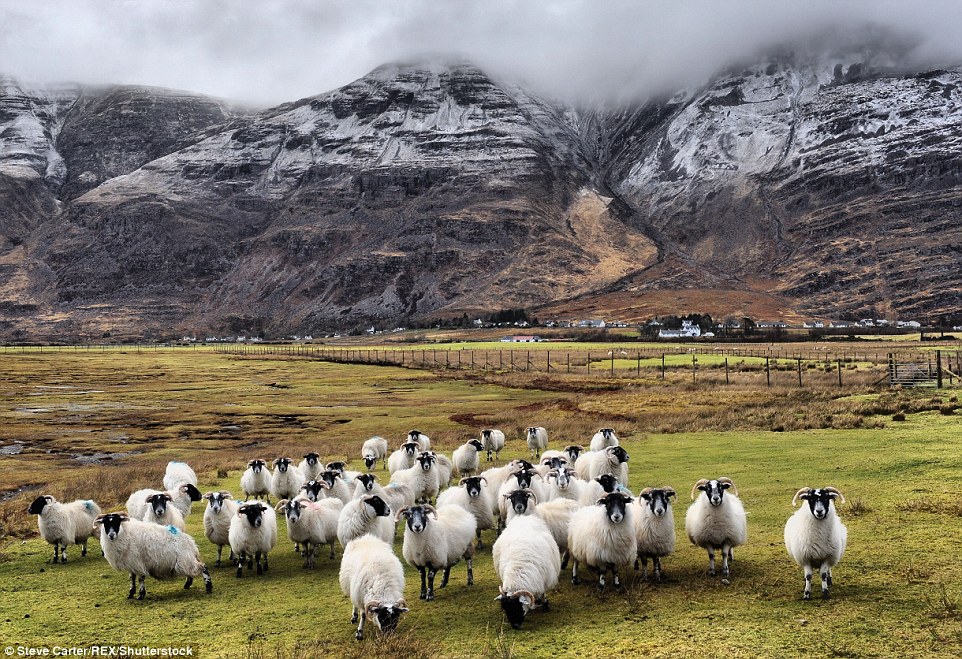
In his book, ‘A Shepherd’s look at Psalm 23’ by W. Phillip Keller, he notes that many plateaus, an elevated area with a flat top, are called “tablelands”. These can be famously found in places like Canada, Australia and India. In Spanish speaking countries these tablelands are called mesas, which is Spanish for table. Therefore, could it also mean that this “table” that is prepared for the sheep is actually found in the higher plateaus where the sheep graze in the summer months?
Preparation speaks of planning, careful forethought and work. A good shepherd will do all this. He will know where he is leading his sheep and has more than likely gone before them, found suitable pasture and may have even prepared it in advance by spreading salt and minerals onto the ground to feed it, He would certainly have checked it out for poisonous weeds and then done the hard work of removing the weeds before the sheep got there. He will also have cleared out the water holes and springs for his stock removing any accumulation of debris over the winter of fallen leaves, twigs, soil and stones. He will also repair any earth dams.
When we think of our Good Shepherd Jesus, we see that he has made very careful planning and preparation for us. Jesus thinks ahead and prepares a way for us. Consider what he said to Peter in Luke 22:31-32: “Simon, Simon, Satan has asked to sift all of you as wheat. But I have prayed for you, Simon, that your faith may not fail. And when you have turned back, strengthen your brothers.” Jesus knew what was ahead for Peter and did the work of prayer on his behalf to help him.
Although Jesus existed in the form of God, He did not regard equality with God as something to be “grasped”, “exploited,” or “clung to” for his own advantage. Instead, He chose to humble Himself, take the form of a servant, and become obedient to death. (Philippians 2:6). Jesus chose to become like one of us so that He was tempted in every way, just as we are, yet was without sin. This means that Jesus experienced the full force of human struggle and suffering, making him very sympathetic and understands human weakness. (Hebrews 4:15).
This phrase “preparing a table before me in the presence of my enemies” reflects the eastern custom of hospitality, where a host would provide a meal for a guest as a sign of protection and honour. In biblical times, sharing a meal was a covenantal act, symbolizing peace and fellowship. “In the presence of enemies”, suggests divine provision and security, even in the midst of adversity. It could also be a reference to the Messianic banquet, where believers are invited to dine with Jesus as mentioned in Revelation 19:9.
This meal in the presence of enemies echoes the Passover meal that the Israelites ate in faith while Egypt still opposed them (Exodus 12:11). And of course we then think of what Jesus did at the Last Supper (Luke 22:19-20) and the implications of this meal for us today (1 Corinthians 11:23-26). When we partake of the emblems at communion we remember how much Jesus has done for us in order that we can partake of this bread and wine. Jesus came and suffered greatly for us. He was wounded rejected and despised. His body was subjected to unbelievable torture and agony. He allowed his blood to be shed for us as an atonement for our sin. By His stripes we are healed. He went through the horror of the cross because of the joy of knowing that one day we would have sweet communion with Him and just as the disciples enjoyed sweet fellowship with Him on earth, we too will one day eat and have fellowship with Him when we see Him face to face.
Next time we will look at: “You anoint my head with oil; my cup overflows”.
